African Safaris Hub Kilimanjaro


Kilimanjaro · Northern Circuit
Photography Northern Circuit Climb
A nine-day Northern Circuit ascent designed for photographers who want more time to observe, compose and capture Kilimanjaro’s changing landscapes from forest to summit.
Overview
A Northern Circuit climb built around the mountain’s best light
The Northern Circuit is Kilimanjaro’s longest established route, circling the quieter northern slopes before joining the summit approach. Its gradual profile and broad range of landscapes make it especially rewarding for photographers who want more than a quick summit attempt.
This nine-day version gives you time to photograph changing vegetation, volcanic textures, distant ridges, cloud formations and the summit environment without turning every stop into a race. Early starts and flexible pauses can be used for the best available light, while the route’s longer acclimatization profile helps keep the focus on the experience.
Photography remains secondary to safe trekking and altitude management. Your guide controls the pace and route, while you can use suitable viewpoints and camp surroundings to create a stronger visual record of the climb.
Trip at a glance
Duration
9 days / 8 nights
Route
Northern Circuit
Difficulty
Moderate to challenging
Max altitude
Uhuru Peak, 5,895m
Accommodation
Mountain tents + hotel
Best months
Jan–Mar, Jun–Oct
Style
Private / photographer-friendly

Photography highlights
More time for the photographs that matter
- Changing landscapes from lush forest and moorland to volcanic desert and the arctic summit.
- Shira Plateau perspectives with wide-open compositions and distant views toward Kibo.
- Quiet northern slopes that offer a more remote visual character than busier southern approaches.
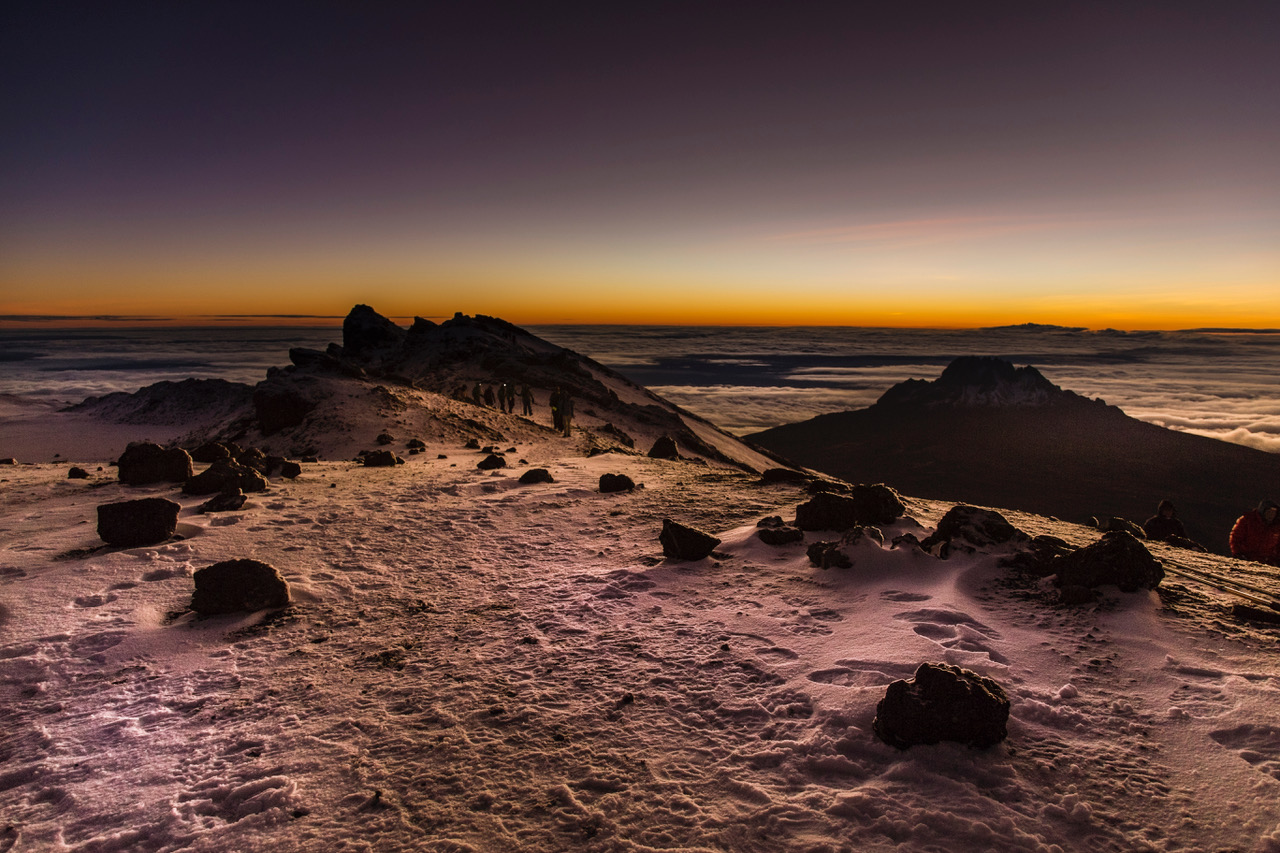
- Summit sunrise for high-contrast landscapes, silhouettes and the changing light across the crater rim.
- Dedicated photography time at suitable viewpoints, while keeping altitude safety and group pace first.
Day by day
Your 9-day Photography Northern Circuit itinerary
Lemosho Gate to Mti Mkubwa Camp
After registration and a briefing, the trek enters Kilimanjaro’s lush rainforest. The slower opening pace is ideal for photographing moss, ferns, forest textures and the first wildlife signs before reaching Mti Mkubwa Camp.
Mti Mkubwa Camp to Shira 1 Camp
The forest opens into heather and moorland as the trail climbs toward the Shira Plateau. Clear conditions can create excellent wide-angle views, with afternoon and evening light often changing the mood of the plateau.
Shira 1 to Shira 2 Camp
A relatively gentle acclimatization day across the Shira Plateau. The open terrain gives photographers room to work with scale, foreground textures, clouds and the changing silhouette of Kibo.
Shira 2 to Moir Hut
The route leaves the main western approach and climbs toward Moir Hut. Volcanic rock, ridgelines and broad empty spaces become the dominant photographic subjects as the vegetation thins.
Moir Hut to Pofu Camp
A scenic traverse through the northern side of Kilimanjaro. The quieter landscape offers a different perspective of the massif, with opportunities for layered mountain compositions and low-light landscape work.
Pofu Camp to Third Cave Camp
Continue around the northern circuit through increasingly stark terrain. The shorter walking day leaves room to work with camp details, rock formations and the changing light on Kibo when conditions cooperate.
Third Cave to School Hut
The route climbs toward the summit zone and School Hut. After settling in, prepare camera batteries, memory cards and summit layers for the cold early-morning photography session.
School Hut to Uhuru Peak, then Mweka Camp
Begin before dawn for the summit push. The priority is a safe ascent, with opportunities for sunrise photography around the crater rim and Uhuru Peak when weather, visibility and your condition allow. Descend to Mweka Camp for recovery.
Mweka Camp to Mweka Gate, then transfer to your hotel
A final descent through the rainforest to Mweka Gate. After completing the climb, transfer back to your hotel and use the afternoon to back up photographs, recharge batteries and celebrate the expedition.
The details
What’s included & what’s not
Included
- All national park, camping & rescue fees [PLACEHOLDER. CONFIRM]
- Professional, licensed mountain guides [PLACEHOLDER. CONFIRM]
- Porters and mountain support crew [PLACEHOLDER. CONFIRM]
- All meals & drinking water on the mountain [PLACEHOLDER. CONFIRM]
- Quality mountain tents, sleeping mats & camp equipment [PLACEHOLDER. CONFIRM]
- Hotel nights before and after the climb [PLACEHOLDER. CONFIRM]
- Airport / hotel transfers [PLACEHOLDER. CONFIRM]
- Emergency oxygen, altitude monitoring & first aid [PLACEHOLDER. CONFIRM]
Not included
- International flights
- Tanzania entry visa
- Travel insurance with high-altitude cover
- Tips for guides, cooks and porters
- Personal camera, lenses, batteries and accessories
- Camera protection, dry bags and personal electronics
- Personal expenses, laundry and drinks outside the mountain
- Optional private photography services or specialist equipment rental
Good to know
Before you book this climb
Photography pace
Expect a steady trekking pace with controlled pauses at suitable viewpoints. The guide will balance photography opportunities with group safety.
Best light
Early morning and late afternoon often provide softer, more directional light. Weather can change quickly, so flexibility matters more than a fixed shot list.
Altitude first
The nine-day route gives a gradual ascent, but photography never overrides altitude management, rest, hydration or guide instructions.
Camera care
Carry spare batteries, protect gear from rain and dust, and keep batteries warm during the cold summit section. A lightweight setup is easier to manage on the trail.
Questions
Frequently asked
Is this climb suitable for photographers?
Yes. The Northern Circuit offers varied landscapes and a gradual nine-day profile. The itinerary is designed to leave room for photography without compromising the trekking schedule or altitude safety.
Will we stop specifically for photographs?
Where conditions and the day’s route allow, your guide can identify suitable viewpoints and allow short photography pauses. The priority remains safe pacing, weather and acclimatization.
What camera should I bring?
A lightweight mirrorless or compact camera can work very well. A versatile wide-to-short-telephoto lens is usually more practical than carrying a large collection of lenses. A good smartphone can also be useful as a backup.
How do I protect my camera on Kilimanjaro?
Use a padded or weather-resistant daypack insert, keep electronics protected from rain and dust, and carry spare batteries close to your body in cold conditions. Avoid carrying unnecessary weight.
Will I get sunrise photographs from the summit?
The summit attempt is normally timed around the early morning, creating the possibility of sunrise photography. Exact light, visibility and access depend on weather, route conditions and your physical condition on summit day.
Enquire & book
Reserve your Photography Northern Circuit climb
Send us your preferred dates, group size and photography goals. We’ll reply with availability, package details and an all-inclusive quote.
We reply within one working day