
Planning Your Tanzania Trip
Kilimanjaro and Serengeti Migration: Fitting Both Into One Two-Week Trip
Africa's highest summit and its greatest wildlife spectacle sit roughly four hours apart. Two weeks is enough to do both properly, but only if you book the right month and sequence the two halves in the right order. Here is how the timing actually works.
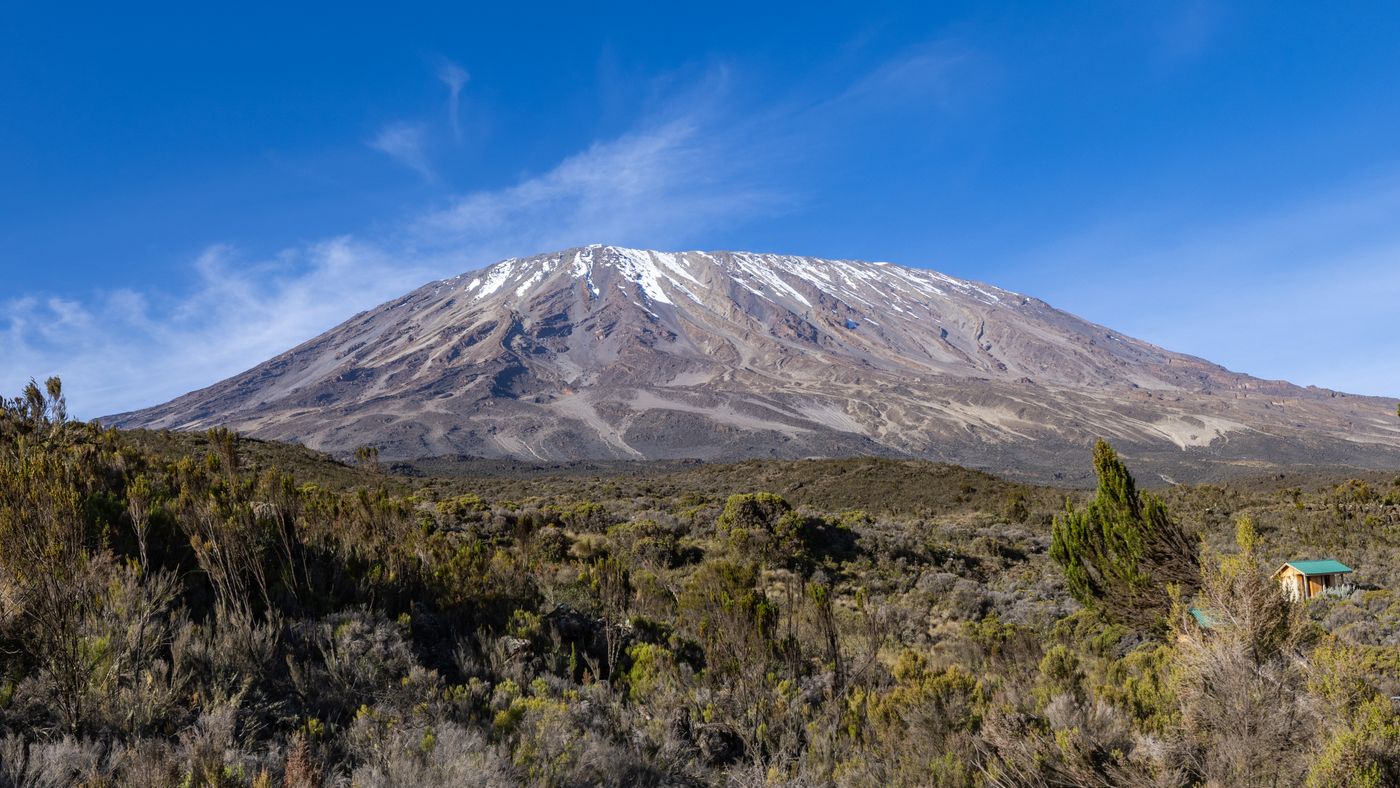
Most people who fly to Tanzania come for one of two things: to stand on the Roof of Africa, or to watch nearly two million wildebeest move across the Serengeti. The question we are asked most often is whether you can reasonably do both on a single trip, in two weeks, without rushing either one.
The short answer is yes. Kilimanjaro and the Serengeti sit in the same corner of northern Tanzania, served by the same airport, and a well-built fourteen-day plan gives you a full climb, proper recovery, and several days of game viewing. Thousands of travellers combine them every year.
The longer answer is that the combination only works brilliantly in certain months. Kilimanjaro has two clear climbing seasons. The Great Migration is in constant motion and sits in a different part of the ecosystem depending on the time of year. Get those two calendars to line up and you have one of the best two-week trips on earth. Ignore them and you can summit successfully, then spend three days driving across empty plains wondering where the herds went.
This guide covers the month-by-month migration calendar, the two overlap windows worth booking, whether to climb or safari first, a realistic fourteen-day structure, which Kilimanjaro route fits a combined trip, and what to budget.
Why combine Kilimanjaro and the Serengeti migration?
There is a practical argument and an experiential one, and both are strong.
The practical argument is cost and distance. You have already paid for long-haul flights to Tanzania, already taken the annual leave, already done the visas and the vaccinations. Adding a safari to an existing Kilimanjaro trip costs far less than flying back to East Africa a second time to do it separately. Both halves start and end at the same airport, Kilimanjaro International (JRO), and our base in Arusha sits between the mountain and the park gates.
The experiential argument is better. The two halves of the trip are opposites in the best way. On the mountain you walk for seven days, carry what you need, sleep in a tent, and work genuinely hard for a sunrise at 5,895 metres. On safari you sit in a vehicle with a cold drink while the landscape delivers everything to you. Doing the hard half first makes the second half feel like a reward rather than a holiday you merely booked.
There is also a recovery argument that climbers underrate. After summit night your body needs a few easy days. A safari is close to the ideal form of active rest: early starts, long sitting, good food, low altitude, and no physical demand at all. Travellers who fly straight home after descending often say the trip ended too abruptly.
Where is the Great Migration each month?
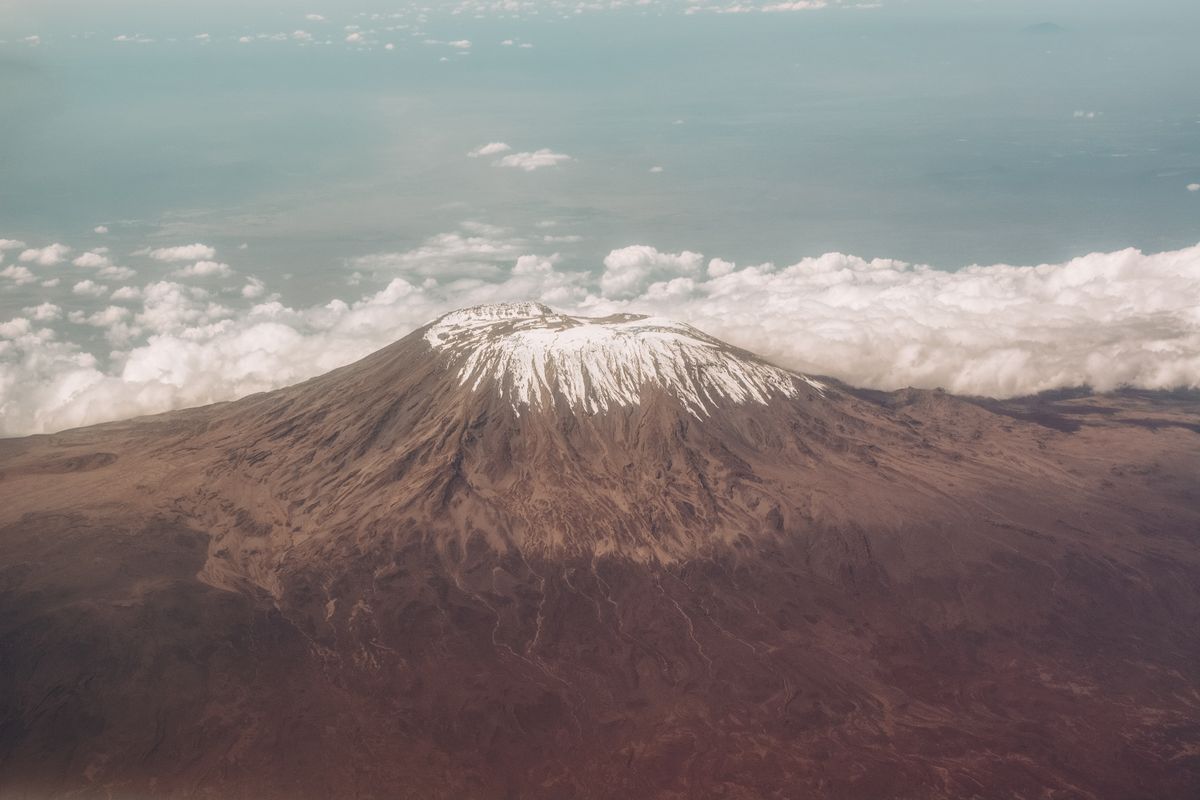
The Great Migration is not an event with a date. It is a continuous, year-round loop of roughly 1.5 to 2 million wildebeest, plus large numbers of zebra and gazelle, following rainfall and fresh grazing around the Serengeti and Maasai Mara ecosystem. The herds are always somewhere. The planning question is simply where they are in the month you can travel, and whether that place is reachable on a short safari.
| Months | Where the herds are | What you are likely to see |
|---|---|---|
| Dec to Mar Window 1 | Southern Serengeti and the Ndutu plains | Calving season, peaking around late January and February. Enormous concentrations on short grass, with newborn calves and very active predators. |
| Apr to May | Moving west and north, central Serengeti | Long rains. Herds on the move and often spread out. Green, quiet and cheaper, but the least predictable for both safari and climbing. |
| May to Jun | Western Corridor, towards the Grumeti | Columns of animals on the move and the first river crossings of the year at the Grumeti. |
| Jul to Oct Window 2 | Northern Serengeti and the Mara River | The famous crossings. Herds massing on the riverbanks and plunging through crocodile water. The images most people picture when they say "the migration". |
| Nov | Turning south again | Short rains draw the herds back down towards the southern plains. A transitional month. |
The migration follows rain, not a timetable. These patterns hold in most years, but an early or late season shifts the herds by weeks. Treat any month-by-month chart, including this one, as a strong guide rather than a guarantee.
When do the climbing season and the migration overlap?
This is the single most important question in planning a combined trip, and it has a clean answer.
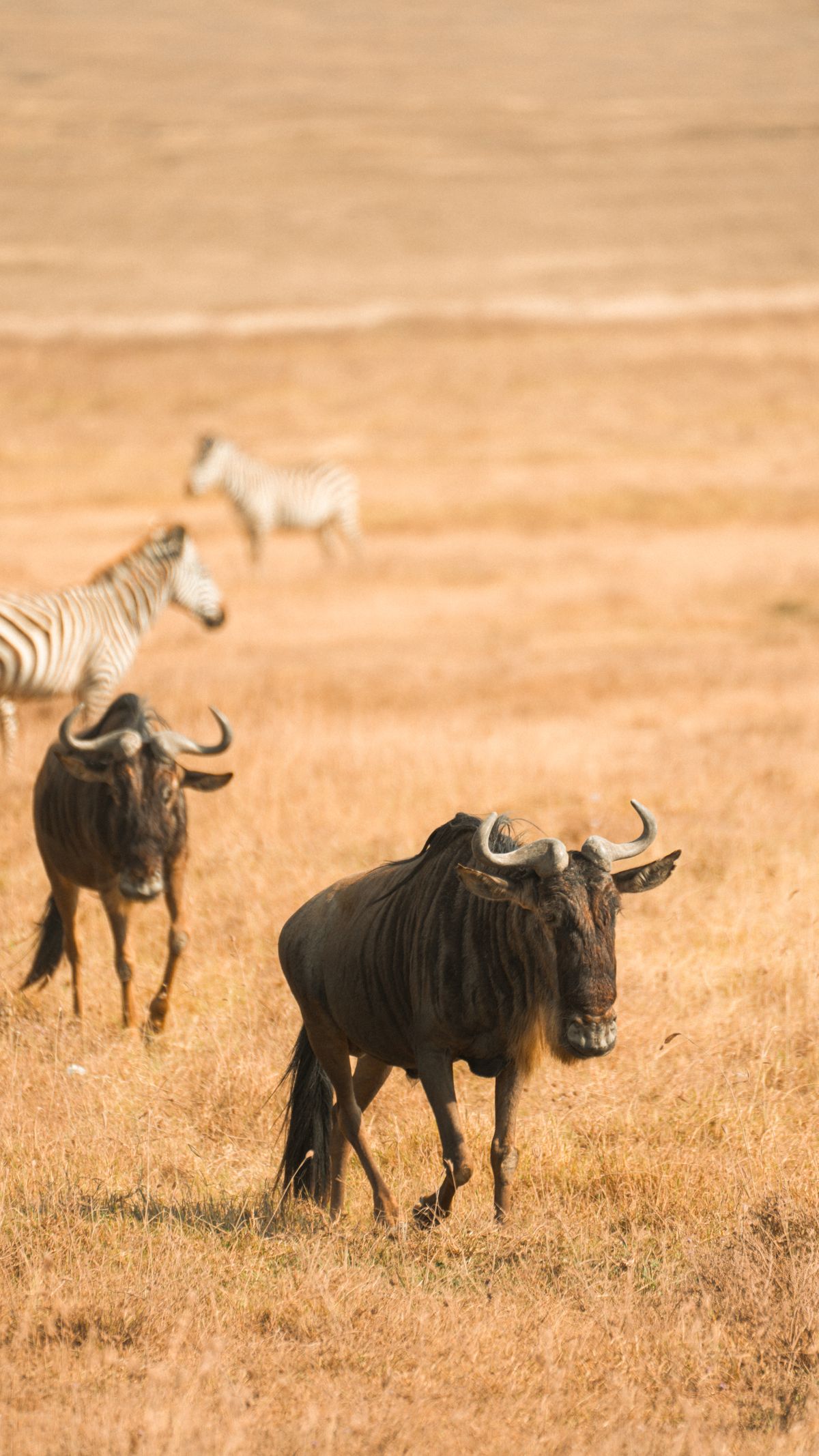
Kilimanjaro has two dry seasons, and they are the two periods we recommend for any climb: January to mid-March, and June to October. These months bring the most settled weather, the clearest summit views and the most reliable trail conditions. The long rains from late March into May and the short rains in November are climbable, but wetter and less comfortable, and we would not build a once-in-a-lifetime trip around them by choice.
Lay that over the migration calendar and two windows stand out.
Late January to February
- Good, settled climbing weather on Kilimanjaro
- Calving season on the Ndutu plains, with huge, dense herds
- Exceptional predator activity around the newborn calves
- Shorter drives: the southern plains sit closer to Arusha than the far north
July to October
- Kilimanjaro's strongest and most popular climbing season
- Mara River crossings in the northern Serengeti
- The classic migration imagery, if that is what you are picturing
- Busiest and priciest window, so book well ahead
A Mara River crossing is the hardest thing in African wildlife viewing to promise. Herds gather at the bank for hours or days and may turn back without crossing at all. Being in the right region in the right month puts you in position. Nobody can guarantee you will witness a crossing, and you should be wary of any operator who says otherwise.

Should you climb Kilimanjaro first or go on safari first?
We recommend climbing first in almost every case, and the reasoning is straightforward.
Why the mountain goes first
You arrive from a long flight with fresh legs, full motivation and a clear head, which is exactly what a seven-day climb deserves. You also protect the summit against the unexpected. If weather, illness or a slower pace means your descent runs late, a safari booked behind it can usually flex by a day. A climb booked behind a fixed safari cannot: park permits, crew and camp bookings are far less forgiving.
Finishing on safari also matches how your body feels. Summit night is long and cold, and most people come down tired, a little dehydrated and very ready to stop walking. Being driven around the Serengeti while someone else cooks is the right shape of day for that version of you.
When safari first makes sense
There are two exceptions worth knowing. If your travel dates fall on the edge of a migration window and the herds are moving fast, we occasionally flip the order so the safari lands on a stronger date. And if you are arriving from near sea level with real anxiety about altitude, two gentle days at around 1,400 to 1,800 metres in the Arusha and Ngorongoro highlands before the climb can help you settle in, though it is no substitute for a proper acclimatisation profile on the mountain itself.
What does a realistic two-week itinerary look like?
Here is the structure we build most often: a seven-day Lemosho climb, a genuine recovery day, and four days of safari, all inside fourteen days from landing to departure.
Arrive at Kilimanjaro International Airport
Transfer to your hotel in Arusha or Moshi. Full kit check with your lead guide, a proper briefing, and an early night. Any gear you are missing can be hired locally that evening.
Climb Kilimanjaro by the Lemosho route
Seven days on the mountain: in through the remote western gate, across the Shira Plateau, the climb-high and sleep-low day at Lava Tower, then Barranco, Karanga and Barafu before summit night to Uhuru Peak at 5,895 metres and the descent to Mweka Gate.
Recovery day in Arusha
Do not skip this. A long shower, a real bed, laundry, and nothing in the diary. It is also your buffer: if the mountain runs a day over, this is the day that absorbs it without touching your safari.
Drive to the Ngorongoro Crater
Head west through the highlands with an afternoon on the crater rim. The crater floor holds a dense, resident population of game, including some of the best black rhino viewing in Tanzania, so it earns its place regardless of where the herds are.
Into the Serengeti, to wherever the herds are
This is the part of the plan that shifts with your travel month: the Ndutu and southern plains between December and March, the northern Serengeti and the Mara River between July and October. Two full days of game drives, with dawn and late-afternoon starts when the animals are most active.
Final game drive and return
A last morning drive, then the drive or short scheduled flight back towards Arusha. A flight buys you several extra hours in the park and is worth considering when you are based in the far north.
Departure
Transfer back to Kilimanjaro International Airport for your flight home, with a summit certificate and a camera full of the Serengeti.
Two details are worth protecting when you adjust this plan. The first is the recovery day, which is the only slack in the schedule and the thing that keeps a delayed descent from wrecking the safari. The second is the number of safari days: three full days is the realistic minimum for reaching migration country and actually spending time there, because a large part of day one and day four is spent travelling.
Which Kilimanjaro route works best in a combined trip?
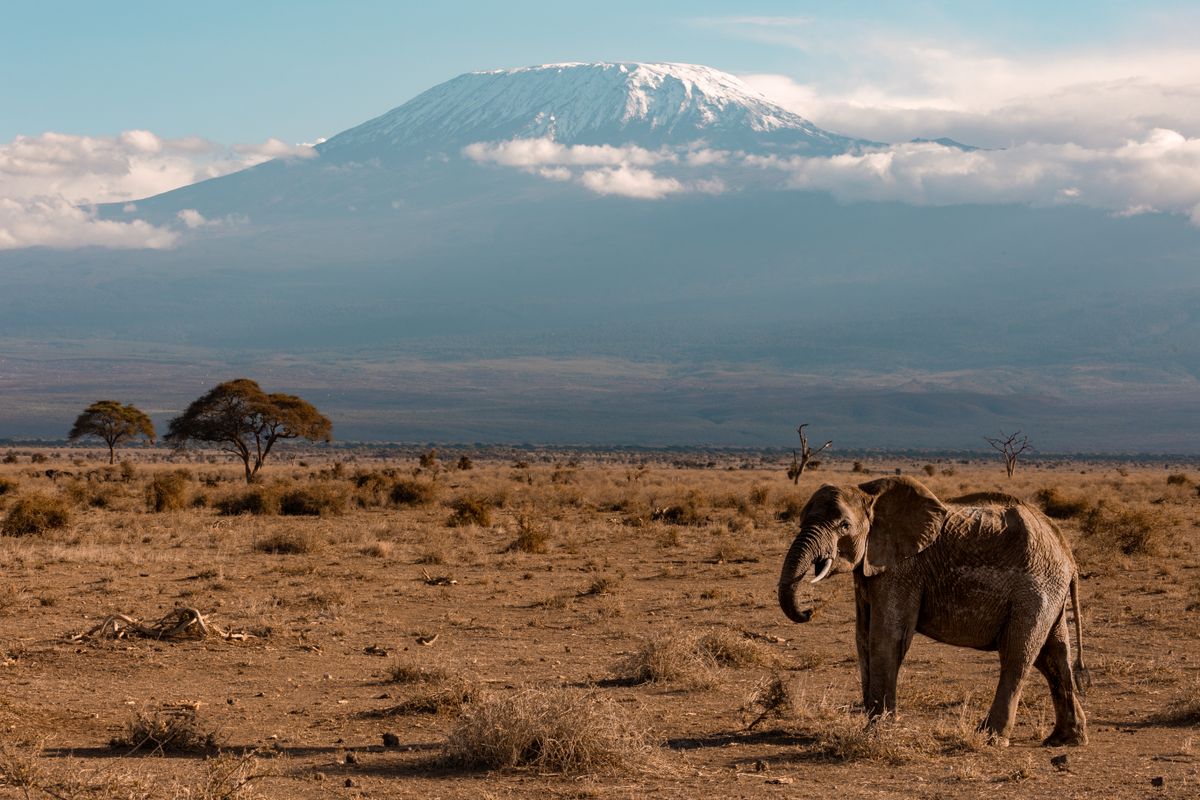
When a safari is attached to the back of your climb, route choice carries an extra consideration: you want the highest realistic chance of summiting on the first attempt, because there is no second attempt inside a two-week window.
That points towards the longer, better-acclimatised itineraries.
- Lemosho, seven days, from US$2,650 per person. Our usual recommendation for a combined trip. A gradual acclimatisation profile, the widest variety of scenery, and a quiet start on the western side of the mountain.
- Lemosho, eight days, from US$3,100 per person. The strongest option if altitude is your main worry. The extra night still fits inside fourteen days, though it trims your safari or your recovery day, so something has to give.
- Machame, seven days, from US$2,550 per person. A scenic and sociable alternative with a solid acclimatisation profile, including the Barranco Wall. Good value when you want more of your budget in the safari half.
- Machame, six days, from US$2,250 per person. The shortest itinerary we would pair with a safari, and only for travellers who are confident at altitude. It buys you an extra day in the Serengeti, at the cost of acclimatisation margin.
Our honest advice is to avoid cutting mountain days to buy safari days. If the climb fails, the safari does not rescue the trip, and the one thing you cannot buy back is a second summit attempt. Protect the climb first, then build the safari around whatever time remains.
What should you budget for a two-week combined trip?
A combined trip has two cost centres, and they behave differently. The climb is priced per day on the mountain: park fees, camping, food and the wages of your guiding and porter team. The safari is priced by park fees, vehicle and fuel, guide, and above all the standard of lodge or camp you choose, which is where the range really opens up.
| Element | Typical length | Indicative cost |
|---|---|---|
| Kilimanjaro climb | 7 days (Lemosho) | From US$2,650 per person |
| Serengeti and Ngorongoro safari | 4 days | From US$2,250 per person |
| Combined 14-day trip | 14 days | From US$6,290 per person |
Indicative starting points only. Final cost depends on group size, season, lodge standard and inclusions. Send us your dates for an exact quote.
You will notice the fourteen-day price is not simply the climb and the safari added together. A combined trip is quoted as one continuous arrangement rather than two separate bookings, so it also carries the parts that join the halves: your arrival and departure hotel nights in Arusha, the recovery day after you come off the mountain, and all the transfers between the airport, the gates and the parks. Those nights and vehicles sit outside a bare climb-only or safari-only rate, which is why the totals do not line up.
Three cost items catch people out, so plan for them from the start. International flights sit outside every package. Tipping for your mountain crew and safari guide is a genuine and significant line in Tanzania, not a rounding error, and we will give you clear guidance rather than leave you guessing. And park fees for the Serengeti and Ngorongoro are substantial.
Ask us directly whether Serengeti and Ngorongoro park fees are included in the quote you receive, and we will set it out line by line so there are no surprises at the gate.
Is a combined trip right for you?
Two weeks covering both is genuinely demanding. It suits most reasonably fit travellers, but not everyone, and it is worth being honest with yourself before booking.
Book both if…
- You have a clear fourteen days and can travel in one of the two windows
- You are coming a long way and may not return to Tanzania soon
- You are prepared to train properly for the climb beforehand
- You want the contrast of a hard climb followed by a comfortable safari
Consider splitting if…
- You have ten days or fewer, which forces a rushed climb or a token safari
- Your dates fall in the long rains and cannot move
- You are travelling with family members who will not be climbing
- Photography is your priority and you want unhurried time in the park
Common questions
How many days do I actually need for both?
Will I definitely see the migration?
Am I too tired after the climb to enjoy a safari?
Can non-climbers in my group do the safari only?
Is February or August the better month?
Do I need any special permits for the safari half?
Tell us your dates and we will build the two weeks around them.
Send us when you can travel and which you care about more, the summit or the herds, and we will tell you honestly whether your dates line up, which route to climb and where in the Serengeti the migration should be that month. If the timing does not work, we will say so and suggest what would.
Plan my Kilimanjaro and Serengeti trip