
Health and Safety on the Mountain
Altitude Sickness on Kilimanjaro: Symptoms, Prevention, and When Guides Turn You Back
Altitude sickness is the single most common reason climbers do not reach Uhuru Peak. It is not about fitness, and it is not a sign of weakness. Here is what it actually feels like, how your guides watch for it, what genuinely prevents it, and the point at which a good guide will send you down the mountain.
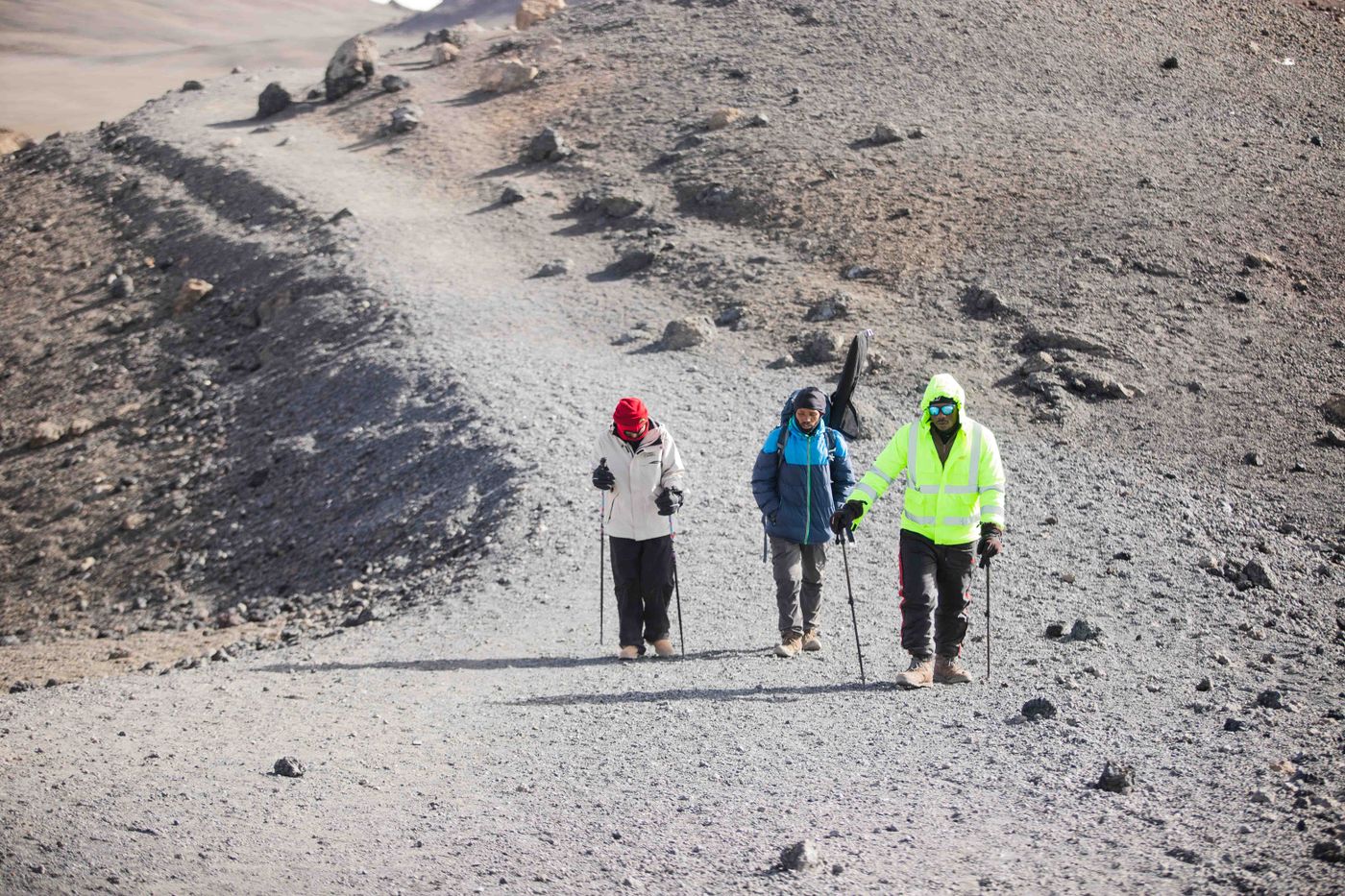
Most people who fail to summit Kilimanjaro are not stopped by their legs. They are stopped by their lungs, their head, and the simple fact that there is roughly half as much oxygen in each breath at Uhuru Peak as there is at sea level.
That is altitude sickness, and understanding it properly is the most useful preparation you can do before your climb. It affects marathon runners and casual hikers alike. It has almost nothing to do with how strong you are, and almost everything to do with how much time you give your body to adapt.
The good news is that altitude sickness on Kilimanjaro is highly manageable when you choose a sensible itinerary, walk slowly, and climb with a crew who check on you properly and are willing to make hard calls. This guide covers what the symptoms actually are, the difference between an uncomfortable headache and a genuine emergency, what prevents it, and what happens if your guide decides your climb ends early.
What causes altitude sickness on Kilimanjaro?
The percentage of oxygen in the air stays the same as you climb, at roughly 21 percent. What changes is air pressure. As pressure falls, each breath delivers fewer oxygen molecules into your bloodstream. By the time you stand on Uhuru Peak at 5,895m, you are working with approximately half the oxygen available at sea level.
Your body responds by breathing faster, raising your heart rate, and over several days producing more red blood cells to carry what oxygen it can get. That adjustment process is called acclimatisation, and it takes time your itinerary has to allow for. Altitude sickness, known medically as Acute Mountain Sickness (AMS), is what happens when you climb faster than your body can adapt.
Kilimanjaro presents a particular challenge here. Unlike many high peaks that require a long trek through progressively higher valleys, Kilimanjaro lets you drive to a gate at around 1,800m and walk to 5,895m in under a week. That speed is precisely what makes altitude sickness so common on this mountain. It is also why the number of days you book matters more than almost any other decision you make.
Who gets altitude sickness?
Anyone. This surprises people, so it is worth being blunt about it. Age, gender, and cardiovascular fitness are poor predictors of who will struggle. Very fit climbers sometimes fare worse, because they are more capable of pushing hard and climbing faster than their body can adjust to.
The one reasonable predictor is your own history. If you have experienced altitude sickness before, you are more likely to experience it again, which is useful information to give your guide and your doctor before you book.
What are the symptoms of altitude sickness?
Altitude sickness exists on a spectrum. The majority of climbers experience something in the mild band and summit perfectly well. A smaller number progress to a stage where continuing up becomes genuinely dangerous. Knowing the difference is what keeps people safe.
The defining symptom is a headache that appears at altitude, usually combined with at least one other symptom from the list below. Think of the headache as the entry ticket and everything else as a measure of severity.
Mild altitude sickness
Experienced by a large share of climbers above roughly 3,000m. Uncomfortable, but not dangerous in itself as long as it is reported and monitored.
- A dull, persistent headache
- Loss of appetite, mild nausea
- Fatigue beyond normal trail tiredness
- Disturbed sleep, vivid dreams, waking short of breath
- Light dizziness when standing up
Moderate altitude sickness
Symptoms that no longer settle with rest, or that get worse as you gain height. At this stage your guide will stop treating it as discomfort and start treating it as a decision point.
- A severe headache that painkillers do not touch
- Repeated vomiting, inability to keep fluids down
- Breathlessness that does not settle after resting
- Marked weakness, needing help with simple camp tasks
Severe altitude sickness: HACE and HAPE
Two rare but life-threatening conditions. Both involve fluid accumulating where it must not, in the brain (HACE) or the lungs (HAPE). Both can develop quickly, and both require immediate descent.
- HACE: confusion, unusual behaviour, drowsiness, and loss of coordination such as being unable to walk a straight line
- HAPE: breathlessness while completely at rest, a persistent cough, a crackling or gurgling sound when breathing, blue or grey lips and fingertips
Climbers routinely downplay symptoms because they have spent serious money and time on this trip and do not want the climb to end. It is the most understandable instinct on the mountain and the most dangerous one.
Mild altitude sickness is common and usually fine. It becomes dangerous mainly when it is concealed, because concealment removes the window in which it could have been managed simply. Tell your guide early, tell them honestly, and in the great majority of cases you will keep climbing.
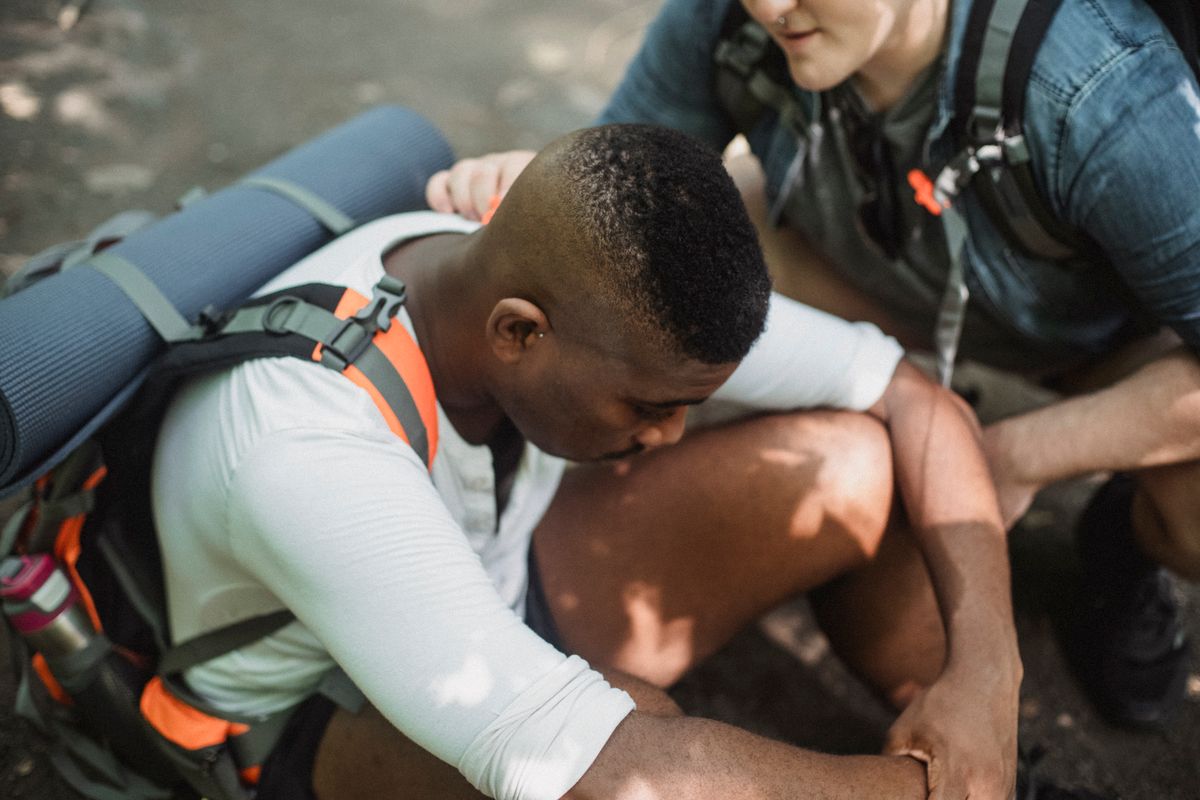
How do guides monitor you for altitude sickness?
On a well-run Kilimanjaro climb, you are assessed formally at least twice a day, usually each morning and each evening in camp. This is not a formality, and it is one of the clearest differences between operators.
A typical health check covers three things:
- Oxygen saturation and pulse. Measured with a pulse oximeter clipped to your finger. Readings naturally fall as you climb, so a single number means very little on its own. What your guide is reading is the trend across days, and how your figure sits alongside how you actually look and feel.
- A structured symptom check. Most professional crews work from a standard assessment such as the Lake Louise Score, asking about headache, appetite, nausea, fatigue and dizziness, and rating each one. Scores are compared day to day, which is why answering honestly matters more than answering optimistically.
- Observation. Experienced guides read things no instrument catches. Are you last into camp when you were mid-pack yesterday? Are you quiet at dinner? Leaving food? Slow to get your boots on? Guides who have run hundreds of climbs notice these shifts before you do.
Ask any operator how often they run health checks, what they record, and what happens to that record during the climb. An operator who cannot answer clearly is telling you something important about how they handle the moment things go wrong.
How do you prevent altitude sickness on Kilimanjaro?
You cannot guarantee immunity. What you can do is stack the odds heavily in your favour, and most of that work happens before you ever set foot on the mountain.
1. Book enough days. This is the big one.
Every other prevention measure on this page is secondary to this one. The number of nights you spend gaining altitude gradually is the strongest lever you have over your own outcome. A five-day itinerary gives your body very little room to adapt. An eight or nine day itinerary gives it a great deal.
This is also where the cheapest quote can cost you the most. A climb that saves money by cutting a day reduces your chance of standing on the summit, and you have still paid for flights, kit, time off work and months of training. If you are weighing routes, our guide to choosing between Lemosho and Machame breaks down how route length affects both your odds and your budget.
| Route | Typical days | Acclimatisation profile |
|---|---|---|
| Marangu | 5 to 6 days | The shortest option. The 5-day version offers the least adjustment time of any route on the mountain. |
| Umbwe | 6 to 7 days | Steep and direct. Gains height quickly, best suited to climbers with previous altitude experience. |
| Machame | 6 to 7 days | Strong profile for its length, with a classic climb-high, sleep-low day at Lava Tower. |
| Rongai | 6 to 7 days | Gradual northern approach, drier conditions, with an extra acclimatisation night available at Mawenzi Tarn. |
| Lemosho | 7 to 8 days | Excellent. A longer, gentler build with an extra night available on the southern circuit. |
| Shira | 7 to 8 days | Good overall, but begins near 3,600m by vehicle, so the first day needs particular care. |
| Northern Circuit | 8 to 9 days | The longest route on Kilimanjaro and the most generous acclimatisation profile available. |
Day counts are typical ranges. Tell us your travel dates and how you feel about altitude and we will recommend a specific itinerary.
2. Walk far more slowly than feels natural
You will hear pole pole (pronounced po-lay po-lay, Swahili for slowly, slowly) from the first hour of day one until you reach the crater rim. It is not a charming local saying. It is the core technique of high-altitude trekking.
Your guides set a pace that will feel almost absurdly slow on the first two days, particularly if you are fit. That pace is deliberate. It keeps your body inside the oxygen budget it currently has and leaves capacity for adaptation. Climbers who push ahead of the group on early days are notably over-represented among those who struggle later in the week.
3. Drink considerably more than you want to
Dehydration mimics and worsens altitude sickness. Cold, dry, thin air pulls moisture out of you with every breath, and at altitude your thirst response becomes unreliable, so you will not feel thirsty in proportion to what you need.
Most crews recommend in the region of three to four litres of water a day while trekking. A practical marker: aim for pale, plentiful urine. If it is dark and infrequent, you are behind, regardless of how you feel.
4. Eat, even when you have no appetite
Loss of appetite is one of the earliest signs of altitude sickness, which produces an unhelpful spiral: you eat less, you have less fuel, you cope worse, and you feel less like eating. Carbohydrates are relatively efficient in terms of oxygen used per calorie delivered, which is why mountain menus lean heavily on rice, pasta, potatoes and porridge. Eat what you can at every meal, even in small amounts.
5. Use the climb-high, sleep-low days properly
Several routes build in a day where you ascend to a high point and then drop back down to sleep lower, the Lava Tower day on Machame and Lemosho being the best known example. These days feel like an odd detour and they are genuinely tiring, but they are among the most valuable days in the whole itinerary. The brief exposure to height triggers adaptation while you recover at a lower sleeping altitude.
6. Talk to your doctor about acetazolamide (Diamox)
Acetazolamide, commonly known by the brand name Diamox, is a prescription medication frequently used to assist acclimatisation at altitude. Many Kilimanjaro climbers take it, and many do not.
This is a conversation for a doctor or travel clinic well before you fly, not something to decide on the mountain or to take on another climber's recommendation. Your doctor will consider your medical history, allergies, other medications and whether it is appropriate for you at all, and will advise on how to take it. Some people experience side effects such as tingling in the fingers and toes, increased urination, or a changed taste to fizzy drinks. If you do plan to take it, ask your doctor about trialling it at home first so you are not discovering how you react to it at 4,000m.
One thing worth being clear about: no medication replaces a sensible itinerary. It supports acclimatisation, it does not substitute for the time your body needs.
7. Avoid alcohol and sleeping tablets on the mountain
Both suppress your breathing, particularly overnight, which is exactly when your body is doing its acclimatisation work. Poor sleep at altitude is frustrating and very common, but sedatives are not the answer. Save the celebratory drink for your return to the hotel in Moshi or Arusha.
Add the extra day
If you are choosing between two itineraries, the longer one is almost always the better investment in your summit.
Go slower than feels right
Let the guide set the pace from hour one. Racing the early days is a false economy paid back on summit night.
Three to four litres daily
Thirst is an unreliable guide at altitude. Drink to a schedule, and judge by urine colour rather than by feel.
Report symptoms early
Early disclosure usually keeps you on the mountain. Concealment is what turns a manageable problem into an evacuation.
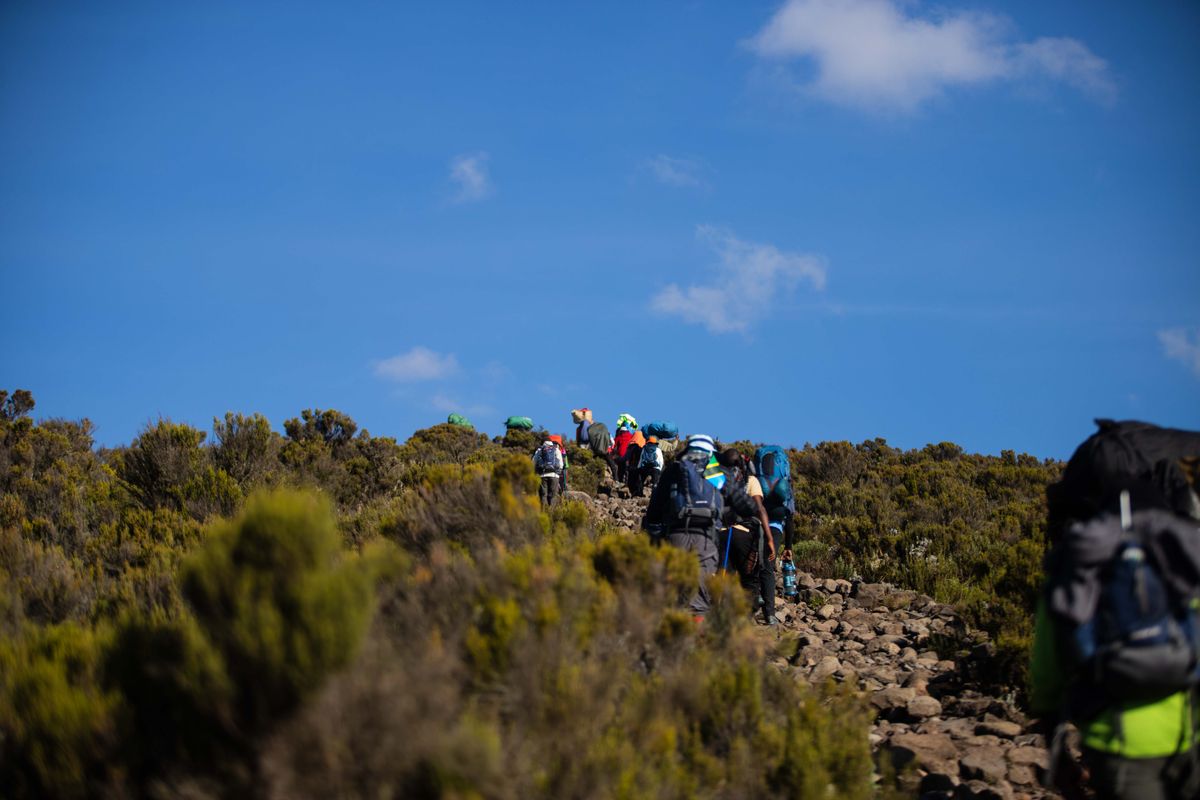
When do guides turn you back?
This is the part most climbers never ask about before they book, and the part that matters most if things go wrong. A professional guide has the authority to end your ascent, and a good one will use it.
It is worth understanding that this is not a judgement on you and it is not a negotiation. Your guide is weighing your symptoms against the altitude still to come, the hours to the nearest point of descent, and what the next six hours are likely to do to you. They have watched this pattern many times. You are experiencing it once.
The decisions that are not negotiable
Certain situations end an ascent immediately, with no discussion, on any reputable operator:
- Any sign of HACE or HAPE. Confusion, loss of coordination, breathlessness at rest, or a wet-sounding cough means immediate descent, whatever the hour and however close the summit.
- Symptoms worsening despite rest at the same altitude. If a day of not climbing has not improved things, height is the problem and only losing height will fix it.
- Persistent vomiting. Once you cannot hold fluids down, dehydration compounds the altitude problem and the situation deteriorates quickly.
- Inability to walk safely unaided. On the scree and rock above Barafu, a climber who cannot move reliably under their own power is at risk from the terrain as much as from the altitude.
What descent actually involves
Most turn-backs are far less dramatic than climbers imagine. An assistant guide walks you down to a lower camp while the rest of your group continues, and in a great many cases you feel substantially better within a few hundred metres of descent. The improvement is often rapid and is one of the clearest illustrations of what was causing the problem.
For more serious cases, descent is assisted, using supplementary oxygen where the crew carries it, and a stretcher or wheeled evacuation unit on the sections that allow it. Kilimanjaro National Park maintains rescue provision, and for genuine emergencies helicopter evacuation is available in Tanzania, subject to weather, daylight and your insurance cover.
Standard travel insurance frequently excludes trekking above 3,000m or 4,000m. For Kilimanjaro you need a policy that explicitly covers trekking to 6,000m and includes emergency evacuation and repatriation. Read the altitude clause before you buy, not after.
What should you ask an operator about altitude safety?
Kilimanjaro operators vary enormously in how they handle altitude, and price is a poor guide to which is which. Before you book with anyone, ask these questions and listen for specific answers rather than reassurance:
- How often do you run health checks, and what exactly do you record at each one?
- Do your guides carry supplementary oxygen and a pulse oximeter on every climb?
- What is your ratio of guides to climbers, and can one guide descend with a sick climber while the group continues?
- What first-aid and altitude-specific training do your guides hold, and how recently was it renewed?
- Who makes the final call on turning back, and has that ever been overruled by a client?
That last question is the revealing one. The correct answer is that the decision sits with the guide and is not open to client override. Any operator who suggests otherwise is selling you a summit rather than a safe climb.
Frequently asked questions about altitude sickness on Kilimanjaro
At what altitude does altitude sickness usually start on Kilimanjaro?
Does being fit prevent altitude sickness?
Can I still summit if I get mild altitude sickness?
How many days should I book to reduce my risk?
Do I need Diamox to climb Kilimanjaro?
What happens to the cost of my trip if I have to descend early?
Not sure how many days you need?
Tell us your travel dates and how you feel about altitude, including any previous experience of it, and we will recommend the route and itinerary length that give you the best realistic chance of standing on Uhuru Peak. No pressure, just a straight answer from a team that climbs this mountain for a living.
Plan my Kilimanjaro climb