African Safaris Hub Kilimanjaro

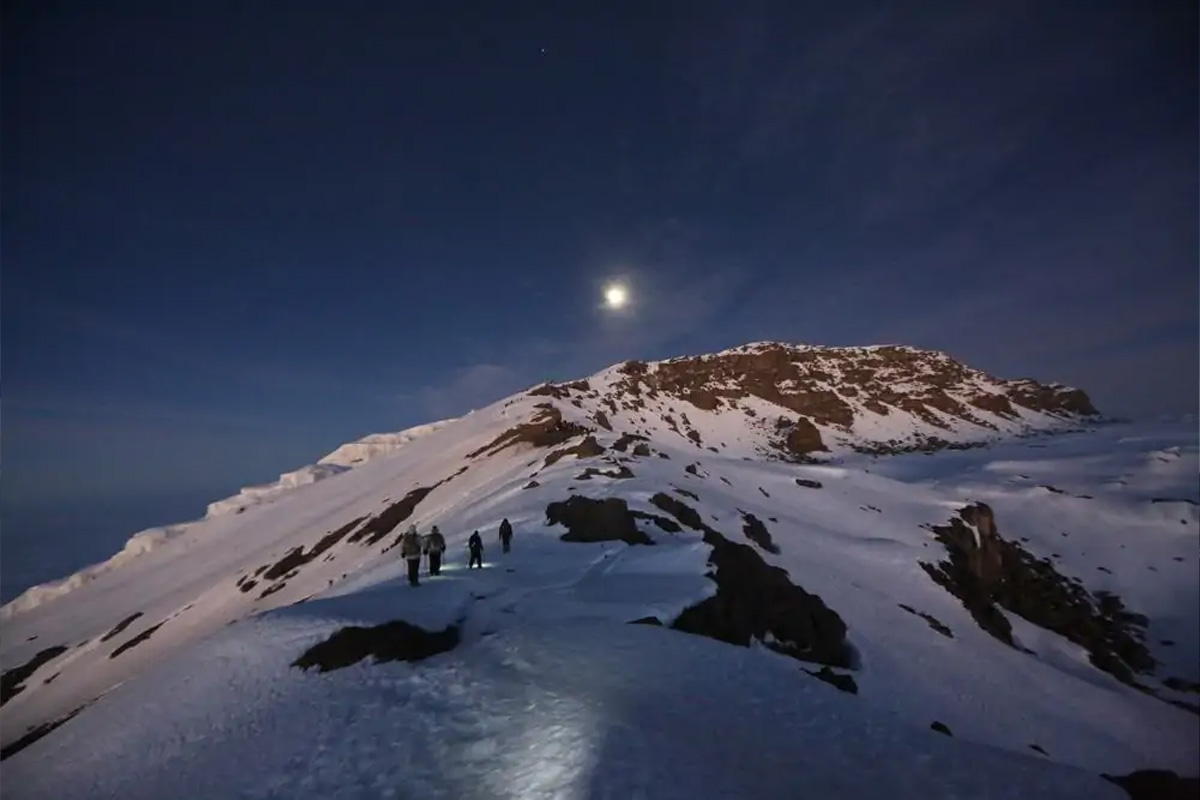
Kilimanjaro · Shira Plateau · Full Moon
Shira Plateau Full Moon Climb
A high-altitude western approach across the Shira Plateau, timed for a full-moon summit night and a memorable moonlit ascent to Uhuru Peak.
Overview
A high-altitude western approach with big mountain scenery
The Shira Route is Kilimanjaro’s original western approach, beginning high on the Shira Plateau rather than climbing gradually through the rainforest. After registration at Londorossi Gate, you continue by vehicle toward the Shira Plateau before starting the trek around 3,500–3,600m.
The route crosses open moorland and the Shira Plateau before joining the Southern Circuit. From there, you climb to Lava Tower for a crucial acclimatization gain, descend to Barranco, tackle the famous Barranco Wall, and continue through Karanga and Barafu toward Uhuru Peak.
This is a non-technical climb, but the high starting elevation makes acclimatization especially important. The itinerary combines gradual trekking days with the “climb high, sleep low” principle before the final summit push.
Trip at a glance
Duration
8 days / 7 nights
Route
Shira Route
Difficulty
Challenging
Max altitude
Uhuru Peak, 5,895m
Accommodation
Mountain tents + hotel
Best months
Jan–Mar, Jun–Oct
Group
Private or small group

Trip highlights
What you’ll experience
- The Shira Plateau under changing light, with open moorland, volcanic formations and expansive views toward Kibo.
- Lava Tower at 4,630m for a key acclimatization climb before descending to Barranco.
- The Barranco Wall, a steep but non-technical scramble with dramatic views across the southern slopes.
- A full-moon summit night, timed so the moon can illuminate sections of the ascent while headlamps remain essential for safety.
- Uhuru Peak at 5,895m, with the moonlit approach giving way to the first light of sunrise over Africa.
Day by day
Your 8-day Shira Plateau Full Moon itinerary
Shira Gate to Shira 1 Camp
After registration and the transfer from Londorossi Gate toward the high Shira Plateau, begin trekking across open heath and moorland to Shira 1 Camp. The short first stage is deliberately gentle because the route starts at unusually high elevation.
Shira 1 Camp to Shira 2 Camp
Cross the broad Shira Plateau through high moorland and volcanic grassland. The route gives you wide views toward Kibo and Shira Peak while another controlled day at altitude helps your body adjust before the route moves higher.
Shira 2 Camp to Moir Hut
Leave the main Shira Plateau trail and head toward the quieter Moir Hut area beneath the Lent Hills. The terrain becomes more rugged and alpine, offering a remote section of the mountain and another useful high-altitude exposure before the Southern Circuit.
Moir Hut to Lava Tower, then Barranco Camp
Climb toward Lava Tower at 4,630m for a major acclimatization gain, then descend toward Barranco Camp. This climb-high, sleep-low pattern gives your body valuable exposure to higher altitude while allowing you to sleep considerably lower.
Barranco Camp to Karanga Camp
Start with the famous Barranco Wall, using hands and feet on the steeper sections without technical climbing equipment. Continue across the Southern Circuit through ridges and valleys before reaching Karanga Camp.
Karanga Camp to Barafu Camp
A short but steadily climbing stage takes you to Barafu Camp, the high base for the summit attempt. After arrival, eat, hydrate and rest while your guide reviews the full-moon summit timing, clothing and headlamp setup for the night ahead.
Barafu Camp to Uhuru Peak under the Full Moon, then to Mweka Camp
Begin the summit push around midnight, timed around the full moon. Climb slowly toward Stella Point and continue to Uhuru Peak as moonlight illuminates the upper mountain where conditions allow. After celebrating the summit, descend through the upper slopes to Mweka Camp for a well-earned rest.
Mweka Camp to Mweka Gate, then transfer to your hotel
Descend through the lush rainforest to Mweka Gate, complete the final park formalities and receive your summit certificate. A vehicle transfer then returns you to your Moshi hotel for a hot shower, a proper meal and a relaxed post-climb evening.
The details
What’s included & what’s not
Included
- Kilimanjaro National Park, conservation, camping and rescue fees
- Professional, licensed mountain guides and assistant guides
- Mountain porters and cook
- All meals and purified drinking water on the mountain
- Quality four-season mountain tents, sleeping mats and camp equipment
- 2 hotel nights in Moshi before and after the climb
- Transfers between Kilimanjaro International Airport, hotel and mountain trailhead
- Emergency oxygen, first-aid support and altitude monitoring equipment
Not included
- International flights
- Tanzania entry visa
- Travel insurance with high-altitude and emergency evacuation cover
- Tips and gratuities for guides, cooks and porters
- Personal trekking gear and equipment rental
- Meals, drinks and accommodation not specifically listed in the package
- Alcohol, laundry and personal expenses
- Optional private toilet, porter upgrades or other comfort services
Good to know
Before you book this climb
Fitness
No technical climbing skills are required, but you need good endurance for long uphill days and the demanding summit push. Training with regular hikes and cardio is strongly recommended.
Best time
January to March and June to October generally offer the most favorable trekking conditions, with drier weather and better trail visibility.
Altitude
The route starts unusually high. Move slowly, stay hydrated, eat regularly and report headaches, nausea, dizziness or unusual fatigue to your guide immediately.
Gear
Bring layered clothing, waterproof outerwear, trekking footwear, a warm sleeping bag and proper summit-night insulation. Quality equipment can be rented when available.

Questions
Frequently asked
What is special about a full-moon Kilimanjaro climb?
The summit attempt is timed around the full moon so the upper mountain can be naturally illuminated during parts of the night ascent. Moonlight can make the landscape especially striking, but headlamps remain essential because shadows, cloud, terrain and weather can reduce visibility.
Is the Shira Plateau Full Moon Climb suitable for first-time climbers?
It can be, but the Shira Route starts high, around 3,500–3,600m, so acclimatization is more demanding than on routes that begin lower. Good fitness, a slow pace and strict attention to altitude symptoms are important.
Will the summit attempt definitely take place in full moonlight?
The itinerary is scheduled around the lunar cycle, but exact timing and visibility depend on the full-moon date, cloud cover, weather, route conditions and the guide’s safety decisions. The guide may adjust the summit timing when conditions require it.
Do I need technical climbing experience?
No. The Shira Route is a non-technical trek. The Barranco Wall is steep and involves scrambling with hands and feet in places, but ropes, belaying and specialist rock-climbing skills are not normally required.
How demanding is summit day?
Summit day is the hardest stage. You normally leave Barafu around midnight, climb toward Stella Point and Uhuru Peak at 5,895m, then descend to Mweka Camp. Expect a long day of roughly 12–16 hours depending on pace, conditions and altitude response.
What is the price per person?
The package is presented from US$2,295 per person based on current researched full-moon Kilimanjaro market pricing. The final quotation should be confirmed for your group size, travel dates, accommodation arrangements and exact inclusions.
Can I combine the climb with a safari or Zanzibar?
Yes. The climb can be combined with a Tanzania safari or a Zanzibar beach stay before or after the mountain. The dates can be coordinated around your international flights and the selected full-moon summit window.
Enquire & book
Reserve your Shira Plateau Full Moon Climb
Tell us your preferred full-moon summit date, travel dates and group size. We’ll check the route schedule and prepare a detailed quotation for your Kilimanjaro climb.
We reply within one working day