
Planning Your Climb
Do You Need Climbing Experience to Summit Kilimanjaro?
It is the first question almost every visitor asks us, and the honest answer surprises people. You do not need technical climbing experience to reach Uhuru Peak. You do need something else, and most people underestimate exactly what that is.
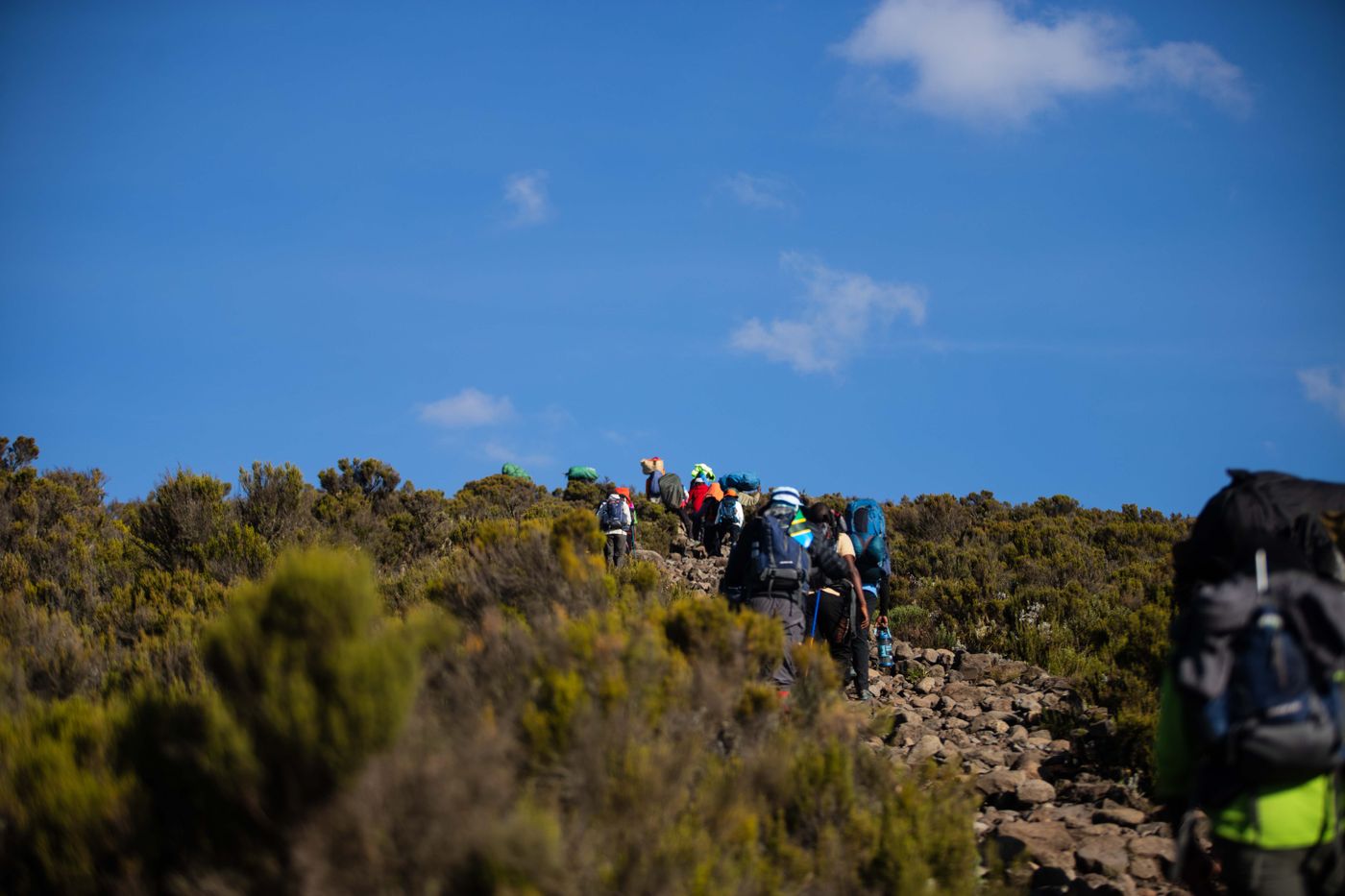
Mount Kilimanjaro is the highest mountain in Africa at 5,895m, and one of the Seven Summits. Those two facts alone convince a lot of people that summiting it must require mountaineering skill, ropes, crampons and years of alpine training. It does not.
Kilimanjaro is what mountaineers call a walk-up or trekking peak. On every standard route, the path to the summit is exactly that: a path. You walk up it. There is no glacier travel, no ice climbing, no rope work, no belaying and no technical skill you need to learn before you arrive in Tanzania. Thousands of people with no previous high-altitude experience at all stand on Uhuru Peak every year.
That is genuinely good news, but it comes with a catch worth understanding before you book. The absence of technical difficulty is exactly what makes Kilimanjaro dangerous to underestimate. The mountain does not filter people out at the trailhead with a skills test. It filters them out at 4,500m, quietly, with altitude. Understanding that shift is the whole point of this guide.
What do people actually mean by "climbing experience"?
Part of the confusion is language. In everyday speech, "climbing a mountain" and "hiking up a mountain" mean the same thing. In the mountaineering world they mean two very different activities, and Kilimanjaro sits firmly in one camp.
Technical climbing means using equipment and learned skills to move over terrain you could not otherwise pass: ropes, harnesses, ice axes, crampons, protection placed in rock or ice, and the ability to arrest a fall or rescue a partner. Peaks like the Matterhorn, Denali or any 8,000m Himalayan giant demand this. Getting it wrong is fatal.
High altitude trekking means walking on established trails to significant elevation. The challenge is not the terrain under your boots, it is the thin air above your head, the cold, the consecutive days of effort and your own willingness to keep going. Kilimanjaro is the most famous high altitude trek on earth.
So when someone asks whether they need climbing experience for Kilimanjaro, the accurate answer is: you need no technical climbing skills whatsoever, but you should treat the trek with the seriousness that its altitude deserves. Those two statements are not in conflict. They are the whole picture.
Is Kilimanjaro a technical climb on any route?
On the routes almost everyone books, no. Kilimanjaro has seven established routes, and six of them are walking routes from gate to summit. Here is how they compare on technical demand, which is the only column that matters for this question.
| Route | Technical skill needed | Best suited to |
|---|---|---|
| Marangu | None. Gradual walking path, sleeping huts rather than tents | First timers who prefer a bed and a gentler gradient |
| Rongai | None. Steady northern approach, the driest route | Rainy season climbs and quieter trails |
| Lemosho | None. One optional hands on scramble at the Barranco Wall | Best acclimatisation and the widest scenery |
| Machame | None. Includes the Barranco Wall scramble | Fit trekkers wanting a scenic, sociable climb |
| Northern Circuit | None. Longest route, most gradual profile | Anyone prioritising acclimatisation above all |
| Shira | None, but starts high at around 3,600m by vehicle | Trekkers already acclimatised to altitude |
| Umbwe | Steep and direct. Still non technical, but unforgiving | Experienced trekkers with a strong altitude history |
Route difficulty is about steepness, length and acclimatisation profile, not technical climbing skill. Ask us which profile matches your fitness.
The single exception is the Western Breach, an alternative summit approach that branches off near Arrow Glacier and ascends a steep headwall to the crater rim. This is a genuinely different proposition, and we cover it separately further down. It is not part of any standard itinerary unless you specifically choose it.
What about the Barranco Wall?
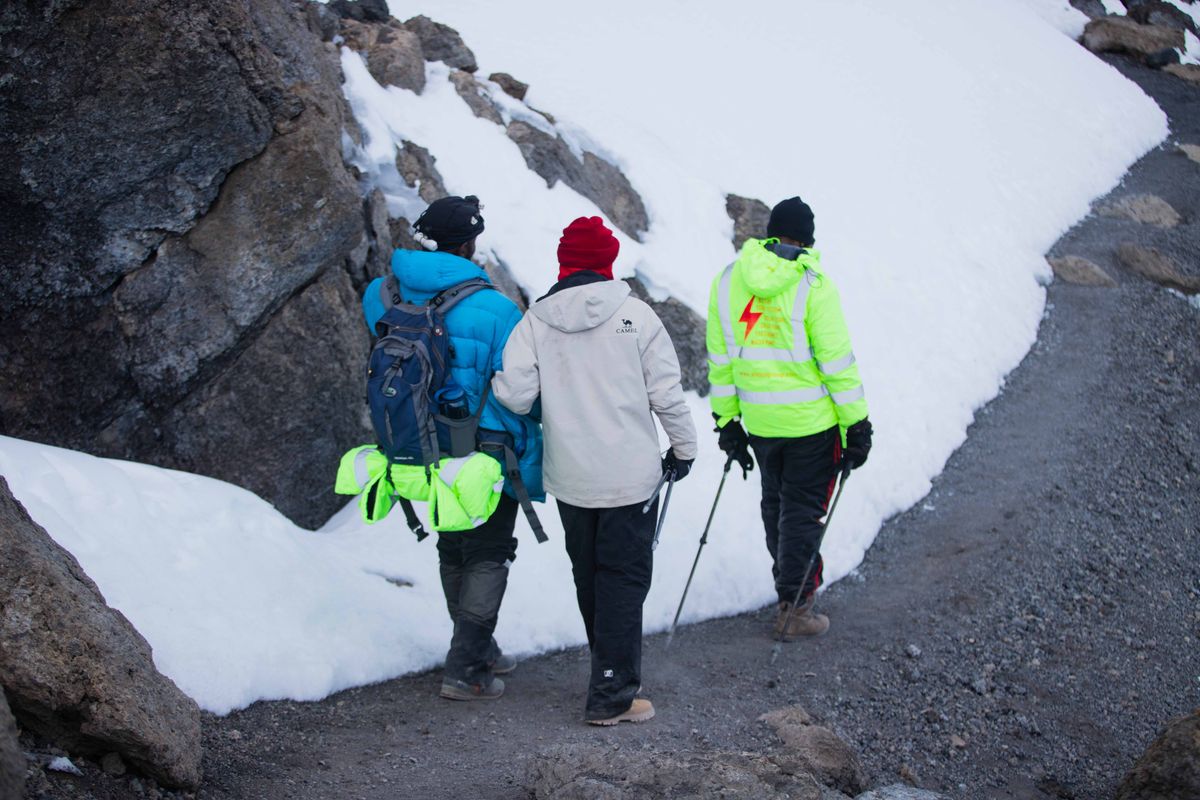
If one feature makes people nervous, it is the Barranco Wall, a 257m rock face that rises straight out of Barranco Camp on the Machame and Lemosho routes. Photographs of it look alarming. Trekkers queue up a steep wall of rock, using their hands, with a drop behind them.
Here is the reality. The Barranco Wall is a scramble, not a climb. Scrambling means using your hands for balance and occasional pulls on good holds, on terrain steep enough that walking alone will not do. No rope, no harness, no specialist technique. Your guides go ahead of you, show you where to place your feet, and porters carrying full loads move up it every single morning.
Most people finish the Barranco Wall and describe it as the highlight of their trek rather than the ordeal they feared. It takes roughly 60 to 90 minutes. If you have ever clambered up a steep, rocky footpath and used a hand to steady yourself, you have already done the hardest move the Barranco Wall will ask of you. The one caveat is genuine vertigo: if serious exposure affects you badly, tell us before you book and we will steer you towards Marangu or Rongai, which avoid the wall entirely.
If not climbing skill, what actually decides who summits?
This is the part worth reading twice, because it is where most failed attempts are actually decided.
At Uhuru Peak, the air holds roughly half the oxygen available at sea level. Your body cannot simply power through that with fitness. It has to adapt, by producing more red blood cells and adjusting your breathing and heart rate, and that adaptation happens on a biological timetable you cannot rush. Altitude sickness does not check your gym attendance. Extremely fit people get it. Cautious, moderately fit people who ascend slowly often do not.
Which leads to the most counter intuitive fact about Kilimanjaro: the strongest predictor of reaching the summit is not how fit you are, it is how many days you spend on the mountain. A six day itinerary gives your body less time to adapt than an eight day one. Every additional acclimatisation day meaningfully improves your odds, which is why we consistently advise people to buy days rather than upgrade anything else.
This is also why you will hear your guides repeat one Swahili phrase more than any other: pole pole, meaning slowly, slowly. Walking at a pace that feels almost absurdly slow is not politeness. It is the single most effective altitude strategy available to you, and the people who ignore it are disproportionately the ones who turn back.
- More days beats more training. If you have to choose between a shorter climb and extra preparation time, choose the longer itinerary.
- Hydration is not optional. Three to four litres a day is standard guidance at altitude, and dehydration mimics and worsens altitude symptoms.
- Tell your guide everything. Headaches, nausea and dizziness are data, not weakness. Reported early, they are usually manageable. Hidden, they end climbs.
How fit do you need to be to climb Kilimanjaro?
Fitness will not guarantee a summit, but poor fitness will reliably prevent one. The standard you are aiming for is not athletic, it is sustainable.
The honest baseline
You should be able to walk continuously for six to seven hours over uneven ground, on consecutive days, while carrying a daypack of around five to seven kilograms. Summit night is longer and harder than any of that: typically a midnight start, six to eight hours of ascent in the cold and dark, then a long descent afterwards on the same day. If a full day hike currently leaves you unable to face another one tomorrow, you have a clear and fixable gap.
A realistic build up
Most people want roughly three to four months of consistent preparation. The specifics matter less than the consistency, but a sensible shape looks like this: two or three cardio sessions a week to build aerobic capacity, one or two strength sessions focused on legs, glutes and core, and crucially a long hike every weekend that gradually increases in distance and elevation. Train in the boots you will actually wear, with the daypack you will actually carry.
The most commonly skipped element is back to back days. Walking eight hours on a Saturday tells you far less than walking six hours on Saturday and six more on Sunday. Kilimanjaro is a cumulative effort, and your training should rehearse that.
If you have any heart, lung or blood pressure condition, or you are taking regular medication, speak to your doctor about high altitude travel well before you book. That conversation is also the right place to discuss altitude medication, which some climbers use and others do not.
What you need instead of climbing experience
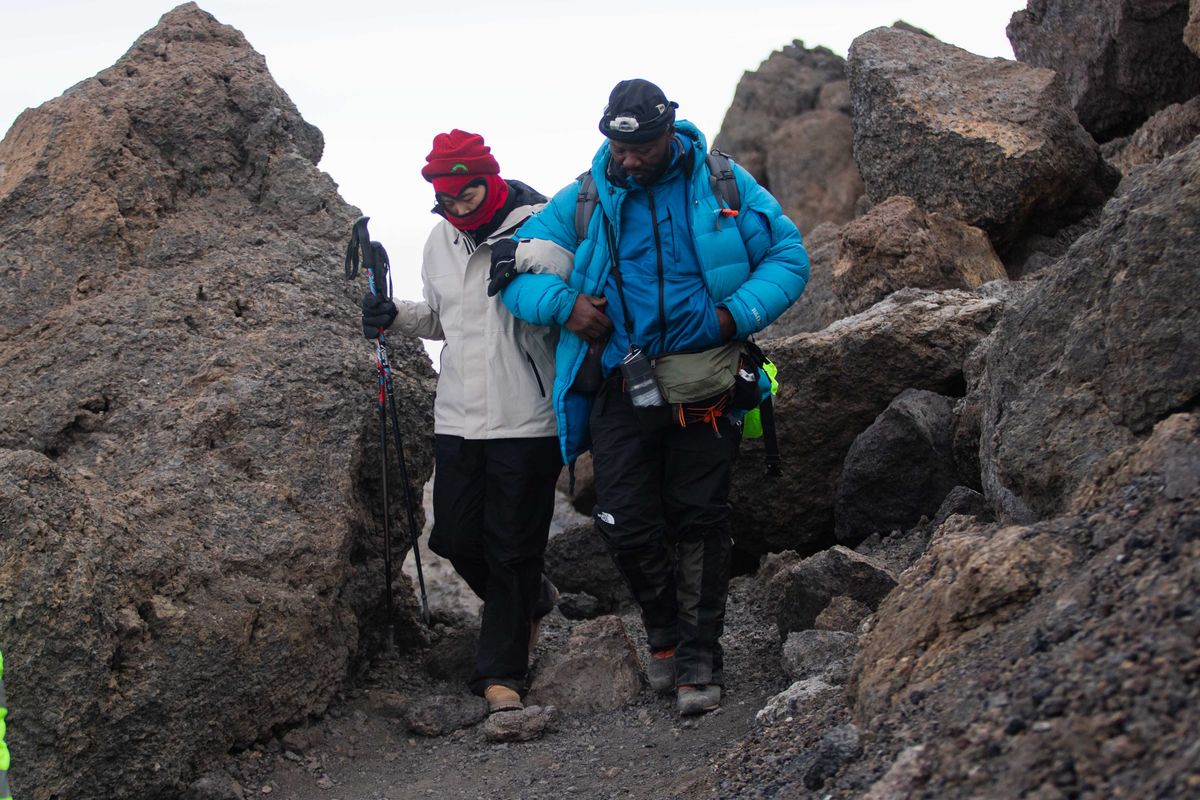
Swap the mountaineering checklist for this one. These six things do far more to determine your summit than any technical skill could.
An aerobic base you have actually tested
Not a gym membership. Real hours on real trails, ideally on hills, in the footwear you will bring to Tanzania.
Enough days on the mountain
The most valuable upgrade you can buy. Seven and eight day itineraries consistently outperform six day ones for comfort and summit odds.
Patience with a slow pace
The discipline to walk far slower than feels natural for five straight days is a genuine skill, and it is the one that matters most.
Proper layered clothing
You pass through rainforest heat and summit night cold in the same trip. Broken in boots and a genuinely warm insulated layer are not places to economise.
Mental resilience for summit night
Cold, dark, thin air and several hours of monotony. Almost everyone wants to stop. Expecting that in advance is most of the battle.
A guiding team that monitors you properly
Daily health checks, oxygen and a first aid kit on hand, guides trained to recognise altitude sickness early and empowered to act on it.
When does mountain experience genuinely matter?
There are a few specific cases where prior experience stops being optional and starts being the deciding factor.
The Western Breach. This steep headwall approach to the crater rim involves sustained exposure and loose rock, and it has been subject to rockfall and seasonal access restrictions in the past. It is suited to confident, experienced trekkers only, and should be booked with full awareness of current conditions. Ask us about current access and guide qualifications before committing.
The Umbwe route. Still non technical, but the steepest and most direct line on the mountain, with a fast altitude gain that leaves little margin for error. We recommend it for trekkers with a proven altitude history rather than first timers.
Rainy season climbs. Wet rock, mud and reduced visibility raise the difficulty of every route. Experience and good kit both matter more in March to May and November.
Which route suits a first timer with no experience?
If this is your first high altitude trek, the choice is really between comfort, acclimatisation and budget. These two are where most first timers land.
Machame Route
- From $2,250 (6 day) or $2,550 (7 day)
- Strong climb high, sleep low profile at Lava Tower
- Scenic and sociable, includes the Barranco Wall scramble
Lemosho Route
- From $2,650 (7 day) or $3,100 (8 day)
- The gentlest acclimatisation curve of the popular routes
- Quiet opening days and the widest variety of landscapes
Prefer sleeping in a hut rather than a tent? Marangu is the only hut based route. Climbing in the wetter months? Rongai is the driest approach. LINK: compare all Kilimanjaro routes.
Five myths about climbing Kilimanjaro
Common questions
Can a complete beginner climb Kilimanjaro?
Do you need oxygen to climb Kilimanjaro?
What is the hardest part of climbing Kilimanjaro?
How many days do you need to climb Kilimanjaro?
Is there an age limit for climbing Kilimanjaro?
What happens if I cannot continue partway up?
Not sure you are ready? Tell us where you are starting from.
Send us your dates, your current fitness and any altitude experience you have, and we will tell you honestly which route and how many days give you the best chance of standing on Uhuru Peak. If we think you need more preparation time, we will say so.
Plan my Kilimanjaro climb